One of the many things that makes Community School unique is our non-graded approach to education. We believe students learn best when they feel supported, understood, and excited about their learning. Our non-graded model is designed to foster curiosity, confidence, and connection, while honoring each child’s individual learning journey.
Why a Non-Graded Model Works
A non-graded approach encourages students to see challenges and mistakes as valuable parts of the learning process rather than failures. Without the pressure to achieve specific grades, students feel more comfortable taking risks, asking questions, and trying new things. In this environment, they learn to set their own goals and take ownership of their education, motivated by the joy of learning rather than by grades.
Our curriculum also allows students to explore topics that interest them without the worry of earning points and making a grade. When students are intrinsically motivated, they engage more deeply, retain knowledge long-term, and develop a genuine curiosity about the world.
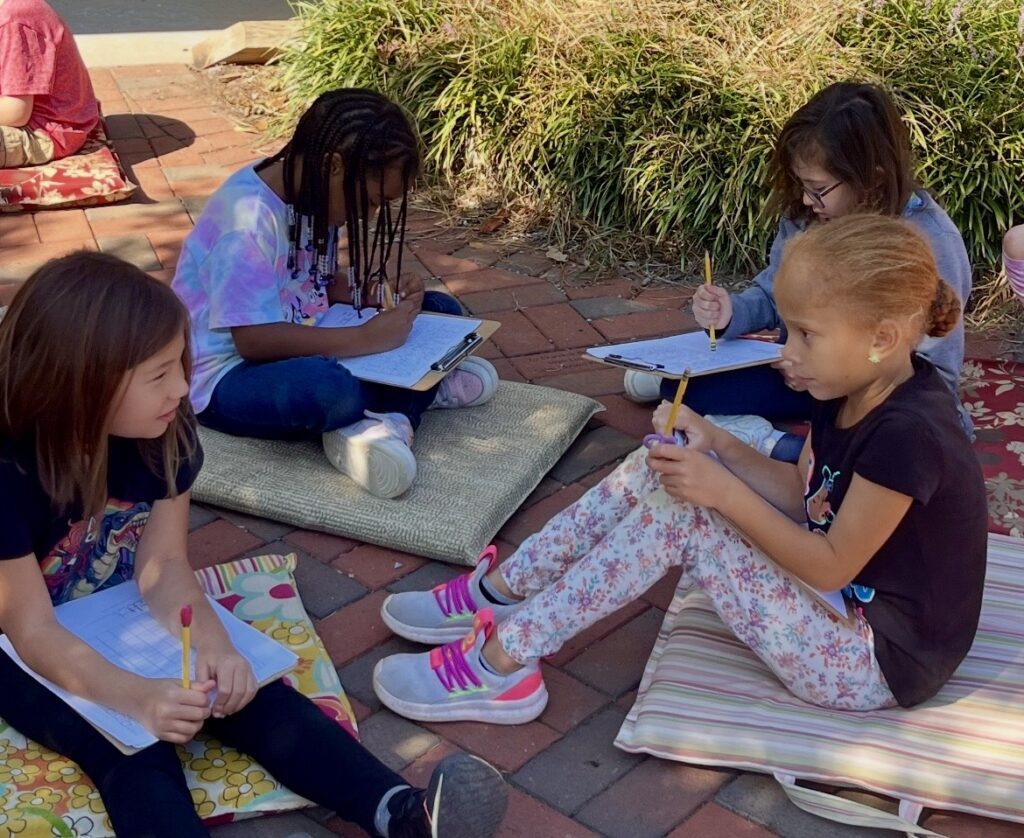
Collaboration is central to the Community School experience. Students work together on projects, supporting one another rather than competing against each other. They build essential social and emotional skills such as empathy, communication, and understanding diverse perspectives.
At Community School, we see each child as an individual with unique strengths, challenges, and interests. Our non-graded approach gives teachers the flexibility to focus on each student’s personal growth, helping them build confidence, resilience, and independence.
How It Actually Works
While we embrace a non-graded approach, we also thoughtfully document each student’s progress and assess their skills so that teachers and families can work together to support each student effectively.
Twice a year, teachers complete skill-based assessments using a scale that reflects our goals as a school:
- Beginning (B): a skill has just been introduced
- Developing (D): a student is working on and growing the skill
- Secure (S): a student is able to independently use the skill
- Extending (E): a student is able to apply the skill in new situations
Teachers assess these skills using age-appropriate expectations, along with a deep understanding of each individual child. In addition, teachers write narrative comments that reflect student growth and progress and highlight important aspects of social and emotional development.
We also recognize the importance of preparing middle school students for a variety of future educational paths, including schools that use traditional grading systems. For this reason, we offer select graded courses in middle school to support a smooth and confident transition to the high school of each student’s choice.
Conclusion
Though our approach may be unique in the Roanoke Valley, non-graded education has a long history of proven success and has been a highly valued tenet of Community School since its inception. Our small class sizes and relationship-focused structure allow educators to closely follow each child’s growth, meet students where they are, and provide the support and challenge they need to thrive.